
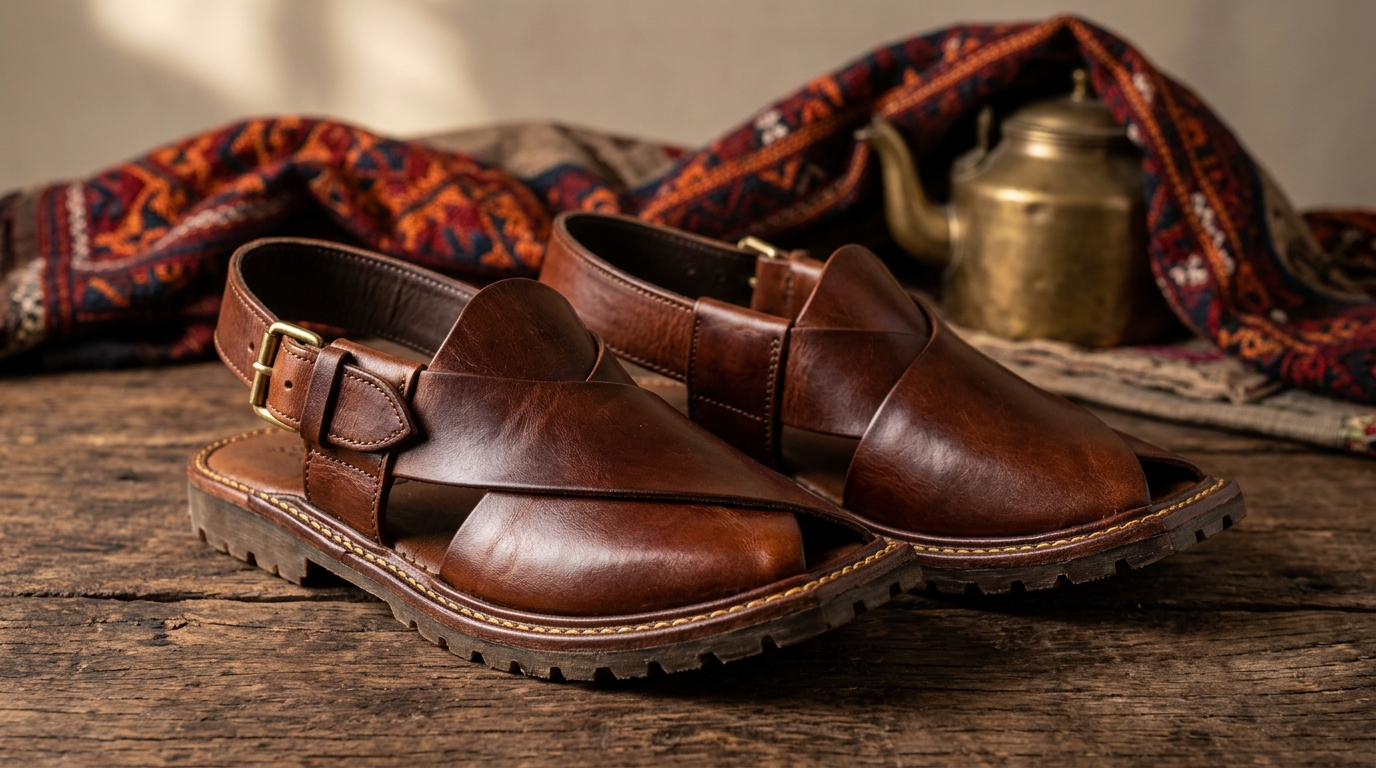

The Art of Peshawari Chappal: A Journey Through Centuries of Pashtun Craftsmanship
In the narrow, bustling streets of Peshawar’s old city, where the aroma of freshly baked naan mingles with the scent of fine leather, a centuries-old tradition continues to thrive. The Peshawari chappal — Pakistan’s most iconic handmade footwear — is more than just a sandal. It is a symbol of ghairat (pride), culture, and the enduring spirit of the Pashtun people.
As the Pashto proverb goes, “Da Pukhtoon pezhaandgalwee da dey chaplo na maloomegee” — “You can know a Pashtun by his chappals.” Today, we take you on a journey into the heart of this magnificent craft.
The Rich History Behind Peshawari Chappals
The origins of the Peshawari chappal date back over 400 years, rooted deep in the Pashtun heartland of present-day Khyber Pakhtunkhwa. Originally crafted for warriors and tribesmen who needed durable, comfortable footwear for the rugged mountain terrain, these chappals have evolved into a fashion statement worn across Pakistan and beyond.
Historically, the chappal was a mark of identity. Different tribes had their own styles — the Keri chappal with its flat sole and cross-straps, the elegant Peshawari Balochi, and the comfortable Saplai with its softer construction. Each design told a story of its wearer’s heritage.
In Urdu, people often say, “Yeh sirf joota nahi, yeh hamari tehzeeb hai” — “This isn’t just footwear, this is our civilization.”

How a Peshawari Chappal is Made: The Artisan’s Craft
Walk into any workshop in Peshawar’s Qissa Khwani Bazaar or Namak Mandi, and you’ll witness a mesmerizing process that has remained largely unchanged for generations.
Step 1: Selecting the Leather
The journey begins with the finest locally sourced leather — typically camel or cow hide. Master craftsmen, known as “mochi ustad”, carefully inspect each hide for quality, texture, and durability. The leather is then treated and softened using traditional methods passed down through generations.
Step 2: Cutting and Shaping
Using hand tools — sharp knives, wooden lasts, and templates — the artisan cuts the leather into precise pieces. Each pair requires multiple components: the sole, the upper straps, the cross-bands, and the heel counter. No two handmade pairs are exactly alike, which is part of their charm.
Step 3: Hand-Stitching
This is where the magic happens. Using waxed cotton thread and curved needles, the craftsman stitches every component together by hand. A single pair can take 4 to 8 hours of meticulous work. The distinctive cross-stitch pattern on the top isn’t just decorative — it provides structural strength and flexibility.
Step 4: Sole Assembly and Finishing
The upper is attached to a sturdy leather or rubber sole using both stitching and traditional adhesive techniques. Finally, the chappal is polished, conditioned, and given its signature warm golden-brown or tan finish.
Types of Peshawari Chappals You Should Know
Not all Peshawari chappals are created equal. Here are the most popular styles:
- Keri Chappal: The classic flat-soled design with the iconic T-strap. Perfect for everyday wear and cultural events.
- Balochi Chappal: Features a pointed toe and more ornate stitching, influenced by Balochi design traditions.
- Saplai Chappal: A softer, more flexible version ideal for casual comfort. Popular among younger wearers.
- Kohati Chappal: Originating from Kohat, these feature a wider strap design and heavier build.
- Ladies Peshawari Chappal: Elegant variations with finer leather, decorative elements, and slimmer profiles designed for women.
At Kaltoor.pk, we carry authentic handmade versions of all these styles, crafted by master artisans in Peshawar.

Peshawari Chappals in Modern Fashion
Gone are the days when Peshawari chappals were reserved only for traditional occasions. Today, fashion-forward Pakistanis — and international style enthusiasts — are pairing them with everything from shalwar kameez to jeans, linen trousers, and even semi-formal outfits.
Style tips for wearing Peshawari chappals:
- 🔹 Casual Look: Pair tan chappals with rolled-up chinos and a linen shirt for a relaxed weekend vibe.
- 🔹 Traditional Look: Match dark brown chappals with a crisp white shalwar kameez and a waistcoat for weddings and events.
- 🔹 Fusion Look: Wear black Peshawari chappals with slim-fit jeans and a kurta for a modern East-meets-West aesthetic.
Why Choose Handmade Over Machine-Made?
In today’s age of mass production, authentic handmade Peshawari chappals stand apart:
- ✅ Durability: Hand-stitched construction lasts years with proper care
- ✅ Comfort: Natural leather molds to your feet over time
- ✅ Unique Character: Each pair carries the artisan’s personal touch
- ✅ Supporting Communities: Your purchase sustains generational craftsmanship
- ✅ Eco-Friendly: Handmade production has a smaller environmental footprint
As they say in Pashto, “Da las jorawale shay ta bya rang wi” — “Things made by hand have a different color (character).”
Preserving a Living Heritage
The craft of Peshawari chappal-making faces challenges from factory-produced alternatives and changing consumer habits. Yet, dedicated artisans and brands like Kaltoor are committed to preserving this magnificent tradition.
By choosing authentic, handmade Peshawari chappals, you’re not just buying footwear — you’re investing in a living cultural heritage that connects you to the proud traditions of the Pashtun people and the artisan communities of Peshawar.
Shop Authentic Peshawari Chappals at Kaltoor.pk
Ready to experience the timeless elegance of genuine Peshawari chappals? At Kaltoor.pk, we bring you 100% handmade, premium leather Peshawari chappals delivered right to your doorstep across Pakistan.
🛒 Browse our complete collection today →
Kaltoor — Where Tradition Meets Your Doorstep.

