
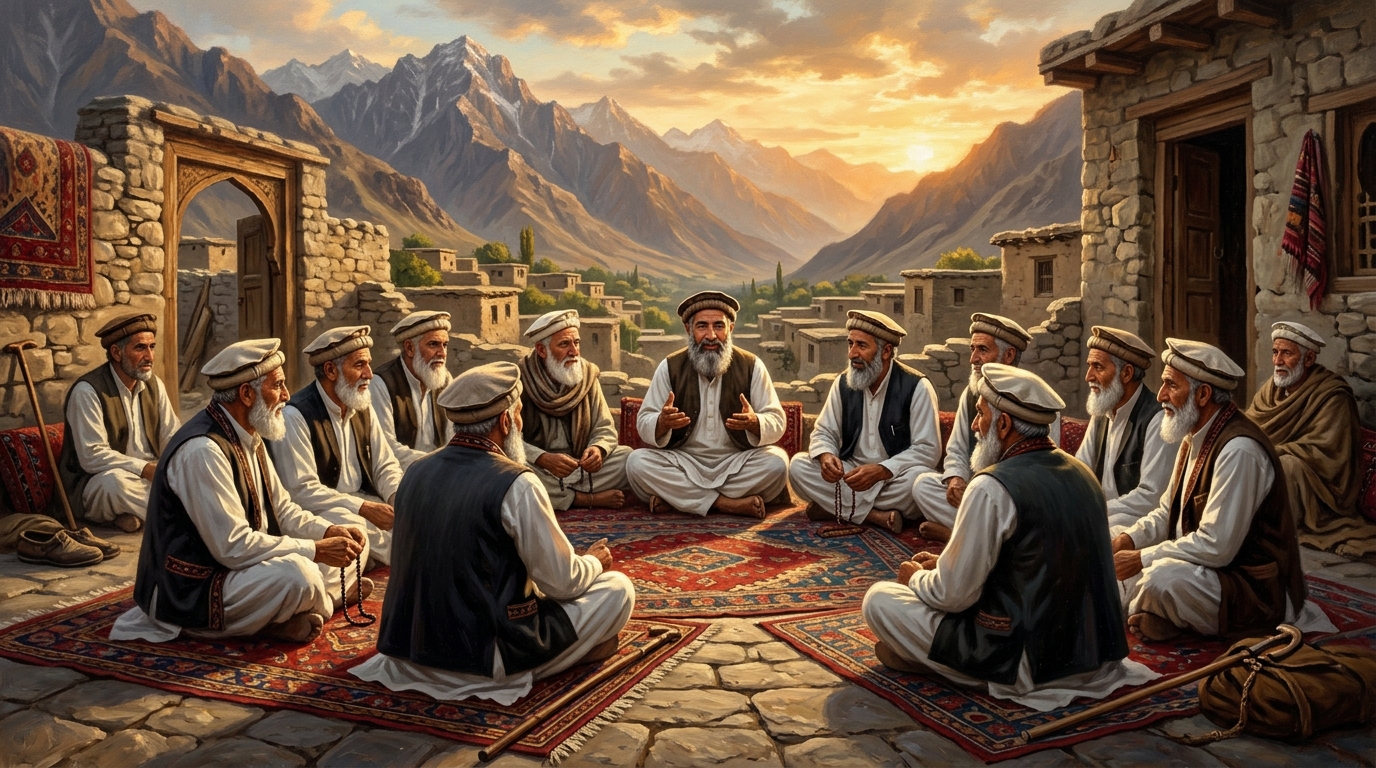

For centuries, the Pashtun people have lived by a code that defines not just their behavior, but their very identity. Pashtunwali — the unwritten constitution of the Pashtuns — is an ancient ethical framework that governs honor, hospitality, justice, and courage. It is the soul of Pashtun society.
In Pashto, they say, “Pukhtoon be Pukhto na shee” (پختون بې پختو نه شي) — “A Pashtun cannot exist without Pashto (the code).” Today, we explore this magnificent tradition that has shaped one of the world’s most proud and resilient cultures.
What is Pashtunwali? Understanding the Pashtun Code of Honor
Pashtunwali (پښتونولي) literally translates to “the way of the Pashtuns.” It is an ancient code of conduct that has been passed down through generations for over 2,000 years. More than just a set of rules, Pashtunwali is a complete way of life — a moral compass that guides every Pashtun from birth.
Unlike written constitutions, Pashtunwali lives in the hearts and actions of the people. It is taught through stories, proverbs, and most importantly, through example. Every Pashtun child grows up watching their elders embody these principles in daily life.
In Urdu, it is often described as: “Yeh sirf riwayat nahi, yeh Pakhtunon ki rooh hai” (یہ صرف روایت نہیں، یہ پختونوں کی روح ہے) — “This is not just tradition, it is the soul of the Pashtuns.”
The Core Pillars of Pashtunwali
Pashtunwali rests on several foundational principles. Each one reflects the values that make Pashtun culture so distinctive and admired worldwide.
1. Melmastia (مېلمستیا) — Hospitality
Perhaps the most famous pillar of Pashtunwali, Melmastia is the sacred duty of hospitality. A Pashtun must welcome every guest — even a stranger or an enemy — with open arms, food, shelter, and protection. Refusing a guest is considered one of the gravest dishonors.
Walk into any Pashtun home, and you will be greeted with warm chai (tea), freshly baked naan, and the famous Kabuli Pulao. The guest room, known as the Hujra (حجره), is the most decorated and comfortable room in the house — always ready for visitors.
As the Pashto proverb teaches: “Melmah da Khudai melmah dey” (مېلمه د خدای مېلمه دی) — “A guest is the guest of God.”

2. Nanawatai (ننواتي) — Asylum and Forgiveness
Nanawatai is the principle of granting asylum and forgiveness. When someone seeks protection or enters your home asking for refuge, a Pashtun is obligated to protect them — even at the cost of their own life. This principle also extends to conflict resolution, where an adversary can seek forgiveness by entering the home of the offended party.
3. Badal (بدل) — Justice and Reciprocity
Badal represents the Pashtun concept of justice. It means that every action — good or bad — must be reciprocated. If someone shows you kindness, you must return it. This principle ensures balance and accountability in Pashtun society.
4. Nang (ننګ) — Honor and Pride
Nang is the cornerstone of Pashtun identity. It encompasses personal honor, family dignity, and tribal pride. A Pashtun will go to extraordinary lengths to protect their nang. It is this fierce sense of honor that has given the Pashtun people their legendary reputation for courage and resilience.
5. Ghairat (غیرت) — Self-Respect and Courage
Ghairat demands that every Pashtun must stand up for what is right, defend the weak, and never bow to injustice. It is the spirit of courage and self-respect that defines the Pashtun character.
6. Jirga (جرګه) — Council of Elders
The Jirga is the traditional Pashtun assembly where disputes are settled, decisions are made, and justice is served. Elders from the community gather in a circle — symbolizing equality — and discuss matters until consensus is reached. The Jirga system is one of the oldest forms of democratic governance in the world.

The Attan: Celebrating Pashtun Spirit Through Dance
No exploration of Pashtun culture is complete without the Attan (اتن) — the national dance of the Pashtuns and the national dance of Afghanistan. This ancient circular dance, performed to the beat of the dhol (drum) and surnai (flute), is a powerful expression of unity, joy, and cultural pride.
Dancers form a large circle and move in synchronized steps, gradually increasing in speed and intensity. The Attan is performed at weddings, festivals, and celebrations, bringing together people of all ages in a shared moment of joy.
As they say in Pashto: “Attan da Pukhtano zra dey” (اتن د پختنو زړه دی) — “The Attan is the heart of the Pashtuns.”
Pashtunwali and Fashion: How Culture Shapes Style
The values of Pashtunwali are deeply reflected in Pashtun fashion. The clothing and accessories worn by Pashtuns are not mere fashion choices — they are statements of identity, honor, and cultural pride.
- The Pakol (پکول): The iconic rolled-up woolen cap symbolizes Pashtun identity and resistance.
- The Shalwar Kameez: The traditional outfit embodies simplicity, dignity, and comfort — core Pashtun values.
- The Waistcoat (Waskat): Worn over the kameez, it adds a touch of elegance for formal gatherings and Jirgas.
- The Peshawari Chappal: Perhaps the most iconic symbol of Pashtun culture — handmade leather chappals that represent craftsmanship, heritage, and pride.
At Kaltoor Premium Wears, we believe that wearing authentic Peshawari chappals is not just a fashion choice — it is a way of honoring the Pashtunwali tradition of nang (pride) and preserving the artisan heritage of Peshawar.
Why Pashtunwali Matters in the Modern World
In an age of rapid globalization and cultural homogenization, Pashtunwali stands as a powerful reminder of the values that truly matter:
- ✅ Hospitality in a world that often turns away strangers
- ✅ Honor in a world that sometimes compromises integrity
- ✅ Justice in a world that doesn’t always deliver it
- ✅ Community in a world that grows increasingly individualistic
- ✅ Courage in a world that often rewards silence
These timeless principles continue to inspire millions of Pashtuns worldwide and earn the respect and admiration of people across cultures.
Carry the Spirit of Pashtunwali with Kaltoor
Every pair of Peshawari chappals from Kaltoor.pk carries the spirit of Pashtunwali — handcrafted with honor by master artisans, built to last with integrity, and delivered with the warmth of Pashtun hospitality.
Whether you choose the classic Peshawari Chappal, the iconic Kaptaan Chappal, or the bold Zalmi Chappal — you’re not just wearing footwear. You’re wearing a legacy.
🛒 Shop authentic Peshawari Chappals at Kaltoor.pk →
Kaltoor — Where Tradition Meets Your Doorstep. د دود او تہذیب رنگ۔

